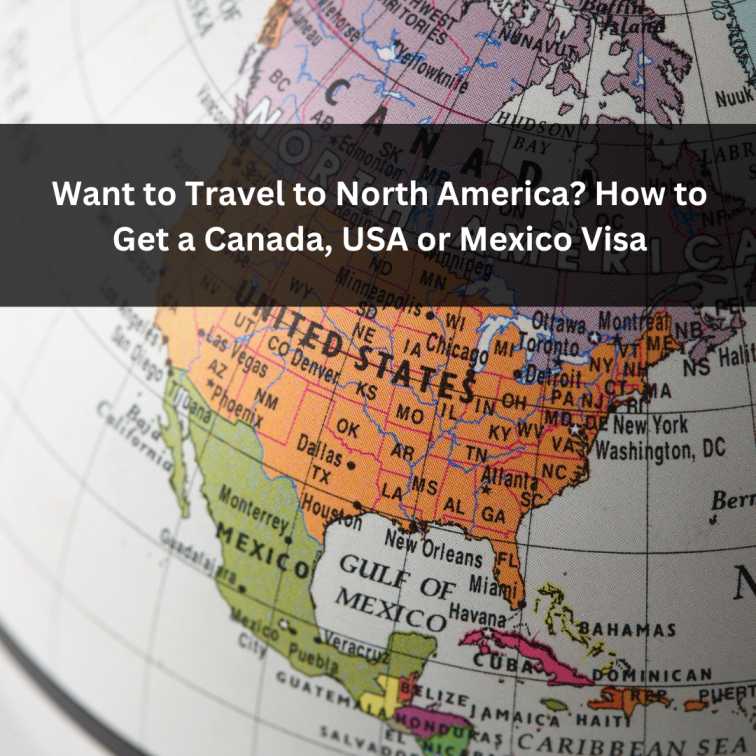
If you are planning to travel to North America, one of the first things you need to determine is whether you need a visa and which type of visa is appropriate for your trip.
North America includes several countries, but the three most popular destinations for international travellers are Canada, the United States and Mexico.
Each country has its own immigration system, visa categories, eligibility requirements, application forms, fees and processing procedures. There is therefore no single “North America visa” that allows you to travel throughout the continent.
For example, a Canadian visitor visa does not give you permission to enter the United States, and a U.S. visa does not automatically allow you to enter Canada or Mexico.
This guide explains how to apply for visas to Canada, the United States and Mexico, including the major visa categories, application steps, required documents and official application websites.
What Is a North America Visa?
There is no official visa called a North America Visa.
When people use the term, they are usually referring to a visa for one of the countries in North America, particularly:
- Canada
- United States
- Mexico
The visa you need depends on:
- Your nationality
- Your destination
- The purpose of your trip
- How long you intend to stay
- Whether you are visiting, studying, working or immigrating
- Your personal circumstances
Before applying, always identify the specific country and visa category that matches your travel plans.
1. How to Get a Canada Visa
Canada offers several immigration and temporary-residence options, including visitor visas, study permits, work permits and permanent residence programmes.
If you are travelling to Canada for tourism, visiting family or friends, or certain business activities, you may need a Temporary Resident Visa (TRV), also known as a visitor visa.
Some travellers may instead qualify for an Electronic Travel Authorization (eTA) depending on their nationality and circumstances.
Canada Visitor Visa
A Canadian visitor visa allows eligible foreign nationals to travel to Canada temporarily.
The Canadian government states that applicants generally need to have a valid travel document, demonstrate that they have sufficient funds for their stay, satisfy admissibility requirements and convince an immigration officer that they will leave Canada at the end of their authorised stay.
Who Can Apply?
You may apply for a Canadian visitor visa if you want to visit Canada for purposes such as:
- Tourism
- Visiting family or friends
- Certain business activities
- Other permitted temporary purposes
Whether you need a visa depends on your nationality and travel circumstances.
Use the Canadian government’s official tool to determine whether you need a visitor visa or eTA before beginning your application.
Canada Visitor Visa Requirements
Applicants may need to provide evidence such as:
- Valid passport or travel document
- Personal information
- Travel history
- Purpose of the visit
- Financial evidence
- Employment or business information
- Evidence of ties to your home country
- Accommodation or travel information where applicable
- Invitation documents where applicable
- Biometrics, if required
- Additional documents requested by IRCC
The exact documents depend on your circumstances.
Canada specifically requires applicants to demonstrate that they have ties—such as employment, a home, financial assets or family—that will help establish that they will leave Canada at the end of their visit.
How to Apply for a Canada Visitor Visa
Step 1: Determine whether you need a visa
Check your nationality and travel circumstances using the official Canadian immigration website.
Step 2: Prepare your documents
Gather your passport, financial documents, employment information, travel plans and other supporting documents relevant to your application.
Step 3: Create or use your IRCC account
Canada provides online application options for visitor visas through its immigration system.
Step 4: Complete the application
Provide accurate information about yourself, your travel purpose, employment, finances and previous travel or immigration history.
Step 5: Pay the applicable fees
The current Canadian visitor visa application fee starts at CAN$100, although other fees may apply depending on your circumstances.
Step 6: Give biometrics if required
Some applicants must provide fingerprints and a photograph after submitting their application.
Step 7: Submit additional documents if requested
IRCC may request additional information, documents or a medical examination depending on your application.
Step 8: Wait for a decision
Processing times vary by country and application type.
Official Canada Visa Website
Canada Immigration:
https://www.canada.ca/en/services/immigration-citizenship.html
Canada Visitor Visa:
https://www.canada.ca/en/immigration-refugees-citizenship/services/visit-canada/visitor-visa.html
Canada Visa Application:
https://www.canada.ca/en/immigration-refugees-citizenship/services/visit-canada/apply-visitor-visa.html
2. How to Get a USA Visa
The United States has different visa categories depending on the purpose of your trip.
Common categories include:
- Tourist visas
- Business visas
- Student visas
- Work visas
- Exchange visitor visas
- Immigrant visas
- Family-based immigration visas
- Employment-based immigration visas
The U.S. Department of State recommends determining the appropriate visa category based on the purpose of your travel.
USA Tourist Visa
If you want to visit the United States for tourism, vacation, visiting friends or relatives, or certain other permitted temporary purposes, you may need a B-2 visitor visa.
For business travel, the relevant category is generally B-1. Some travellers may apply for a combined B-1/B-2 visa.
USA Tourist Visa Requirements
Typical application requirements include:
- Valid passport
- Completed DS-160 application
- Visa application fee
- Photograph where required
- Appointment/interview documentation
- Evidence supporting the purpose of travel
- Evidence of your ability to pay for the trip
- Evidence supporting your intention to leave the United States after your temporary visit
The U.S. government notes that applicants may be asked to provide evidence of their trip purpose, intention to depart and ability to pay travel costs.
How to Apply for a USA Visitor Visa
Step 1: Determine the correct visa
Make sure a visitor visa is appropriate for your intended activities.
A visitor visa cannot be used for employment or ordinary academic study.
Step 2: Complete Form DS-160
The DS-160 Online Nonimmigrant Visa Application is used for many temporary U.S. visa applications.
Complete the form carefully and honestly.
Step 3: Pay the visa application fee
The applicable fee depends on the visa category. The U.S. Department of State currently lists the visitor visa application fee as US$185.
Step 4: Schedule your appointment
Follow the instructions provided by the U.S. Embassy or Consulate responsible for your application.
Interview requirements and procedures can vary.
Step 5: Prepare your documents
Bring your passport, DS-160 confirmation and other required documents.
Additional supporting documents may be requested.
Step 6: Attend the visa interview
The consular officer will assess whether you qualify for the visa.
Applicants may also have their fingerprints collected as part of the process.
Step 7: Wait for the decision
Some applications are approved immediately, while others may require additional administrative processing.
Important: A U.S. Visa Does Not Guarantee Entry
Even after obtaining a U.S. visa, you are not automatically guaranteed admission to the United States.
A visa allows you to travel to a U.S. port of entry and request permission to enter. A U.S. Customs and Border Protection officer makes the final admission decision at the border.
Official USA Visa Websites
U.S. Department of State – Visas:
https://travel.state.gov/content/travel/en/us-visas.html
U.S. Visitor Visa:
https://travel.state.gov/content/travel/en/us-visas/tourism-visit/visitor.html
DS-160:
https://ceac.state.gov/genniv/
Applicants should also check the website of the U.S. Embassy or Consulate handling applications in their country.
3. How to Get a Mexico Visa
Mexico is another major North American destination and has its own immigration and visa requirements.
Whether you need a Mexican visa depends on your nationality, the purpose of your trip and your immigration status in certain other countries.
Common reasons for travelling to Mexico include:
- Tourism
- Visiting family or friends
- Business
- Study
- Employment
- Temporary residence
- Permanent residence
Before applying, check Mexico’s official immigration and consular information to determine which requirements apply to you.
Mexico Tourist Visa
If your nationality requires a Mexican visa for tourism, you generally need to apply through a Mexican embassy or consulate before travelling.
Requirements can vary depending on your nationality and circumstances.
Typical documents may include:
- Valid passport
- Visa application form
- Passport photographs where required
- Evidence of financial resources
- Travel information
- Accommodation information
- Proof of employment or other ties
- Additional documents requested by the consulate
Do not assume that holding a U.S. or Canadian visa automatically gives you permission to enter Mexico. Check the current Mexican entry requirements for your nationality and circumstances.
How to Apply for a Mexico Visa
Step 1: Check whether you need a visa
Start by checking Mexico’s official visa requirements for your nationality.
Step 2: Identify the Mexican consulate responsible for your application
Visa applications are generally handled through Mexican diplomatic missions.
Step 3: Prepare the required documents
Gather your passport, application documents and supporting evidence.
Step 4: Schedule an appointment if required
Follow the instructions provided by the relevant Mexican consulate.
Step 5: Attend your appointment
You may need to submit documents, provide biometric information and attend an interview depending on the visa and consulate.
Step 6: Pay the applicable fee
Visa fees vary according to the type of visa and applicable rules.
Step 7: Wait for your application to be processed
Processing procedures and timelines can vary between consulates.
Can You Visit Canada, USA and Mexico With One Visa?
No.
Canada, the United States and Mexico have separate immigration systems.
A visa issued by one country does not automatically give you the right to enter the other countries.
For example:
Canadian visitor visa → Canada
U.S. visitor visa → United States
Mexican visa → Mexico
There can be specific exemptions and special arrangements for certain nationalities or travellers, so always check the official entry requirements for each country before travelling.
Which North American Visa Should You Apply For?
The correct visa depends on your travel plans.
| Your Purpose | Destination | Possible Visa |
| Tourism | Canada | Visitor Visa / eTA where eligible |
| Tourism | USA | B-2 or B-1/B-2 |
| Business visit | USA | B-1 or B-1/B-2 |
| Tourism | Mexico | Visitor/Tourist visa where required |
| Study | Canada | Study Permit |
| Study | USA | Student visa |
| Study | Mexico | Student visa/residence route where applicable |
| Work | Canada | Work Permit |
| Work | USA | Appropriate employment visa |
| Work | Mexico | Work-authorised immigration route |
| Permanent immigration | Canada | Permanent residence programme |
| Permanent immigration | USA | Immigrant visa |
| Residence | Mexico | Temporary or permanent residence route |
These are general categories. Your actual immigration route depends on your nationality, circumstances and intended activity.
Documents You Should Prepare
Although requirements vary by country and visa type, applicants should generally prepare a strong set of genuine supporting documents.
These may include:
1. Passport
Your passport should be valid and meet the destination country’s requirements.
2. Proof of Employment
Examples include:
- Employment letter
- Payslips
- Leave approval
- Business registration documents
- Tax documents
3. Financial Evidence
Depending on the application, this may include:
- Bank statements
- Savings evidence
- Salary records
- Investment documents
- Business financial records
Your financial documents should accurately reflect your circumstances.
4. Travel Plans
You may need to explain:
- Why you are travelling
- Where you will stay
- How long you intend to remain
- Who will pay for the trip
- What you intend to do during your visit
5. Evidence of Ties
For temporary visitor applications, evidence of your connections to your home country can be important.
Examples include:
- Employment
- Business
- Family responsibilities
- Property
- Education
- Other established commitments
Canada, for example, specifically requires applicants to satisfy an immigration officer that they will leave Canada at the end of their authorised stay.
6. Previous Travel History
If you have travelled internationally before and complied with the conditions of previous visas, you may need to provide details of your previous travel.
Never hide previous visa refusals or immigration issues when a form asks about them.
How to Improve Your Visa Application
There is no guaranteed formula for visa approval, but you can improve the quality of your application by making sure it is accurate, complete and supported by genuine evidence.
1. Be honest
Never submit fake bank statements, employment letters, reservations or other documents.
False information can result in refusal and potentially more serious immigration consequences.
2. Clearly explain your travel purpose
Your application should make it easy for the visa officer to understand why you want to travel.
3. Demonstrate that you can afford the trip
Your financial information should reasonably support your proposed travel plans.
4. Demonstrate your circumstances at home
For temporary visas, clearly document the circumstances that support your intention to return.
5. Keep your documents consistent
Your application form, supporting documents and interview answers should tell the same story.
6. Apply early
Visa processing times vary by country, visa category and individual circumstances. Apply well ahead of your intended travel date.
What Can Cause a Visa Refusal?
Visa refusals can happen for many reasons.
Potential issues include:
- Insufficient evidence
- Unclear travel purpose
- Inability to demonstrate eligibility
- Inadequate financial evidence
- Weak evidence of ties to the home country
- Inconsistent information
- Previous immigration violations
- Criminal or security concerns
- Inadmissibility
- Failure to meet the requirements of the particular visa category
A refusal does not necessarily mean that a person can never obtain a visa. However, applicants should understand the reason for the refusal and address any relevant issues before applying again.
Should You Use a Visa Agent?
You do not necessarily need an agent to apply for a North American visa.
Canada, the United States and Mexico provide official information and application systems that allow applicants to apply themselves.
If you choose to use an immigration consultant, lawyer or other representative, verify that the person is properly authorised to provide immigration services.
For example, Canada specifically provides tools for checking whether an immigration representative is authorised.
Be cautious of anyone who:
- Guarantees visa approval
- Promises a visa without reviewing your circumstances
- Offers fake documents
- Tells you to lie on an application
- Claims to have special connections with an embassy
- Requests unusually large payments for a guaranteed result
No legitimate agent can guarantee that a government will approve your visa.
Frequently Asked Questions
Is there a North America visa?
No. There is no single visa that covers North America. Canada, the United States and Mexico have separate immigration systems.
Can I use a Canadian visa to enter the USA?
Generally, no. A Canadian visa does not automatically give you permission to enter the United States.
Can I use a U.S. visa to enter Canada?
Generally, no. You must meet Canada’s own entry requirements.
How much money do I need for a North America visa?
There is no universal amount. Financial requirements depend on the country, visa type, length of stay and your personal circumstances.
Do I need a visa to visit Canada?
It depends on your nationality and travel circumstances. Some travellers need a visitor visa, while others may qualify for an eTA or another entry arrangement.
Can I work in North America with a tourist visa?
Generally, no. Visitor visas are designed for permitted temporary activities and are not a general authorisation to work. For example, the U.S. Department of State specifically states that employment is not permitted on a visitor visa.
Can I study with a tourist visa?
A visitor visa generally should not be used for ordinary full-time academic study. You should obtain the appropriate study authorisation for your programme.
Final Advice
Getting a visa for North America starts with choosing the correct country and immigration category.
Do not simply search for a “North America visa.” Instead, determine whether you want to visit Canada, the United States or Mexico, identify the appropriate visa or travel authorisation, and then follow that country’s official application process.
The most important things you can do are:
- Choose the correct visa category.
- Use official government websites.
- Provide accurate information.
- Prepare genuine supporting documents.
- Demonstrate that you meet the requirements.
- Apply early.
- Avoid anyone promising guaranteed approval.
Immigration rules and application procedures can change, so always check the relevant government website immediately before submitting your application.
Official Visa Websites
Canada
Canada Immigration – Official Website
Canada Visitor Visa Information
United States
U.S. Department of State – Visas
Mexico
Mexico Government – Official Website
Applicants should use the official Mexican government or Mexican embassy/consulate website relevant to their country for current visa requirements.
Disclaimer: This guide is provided for general informational purposes and does not constitute immigration or legal advice. Visa requirements, fees, processing procedures and eligibility rules can change. Always verify the latest requirements with the official government authority of the country you intend to visit before submitting an application.
OpportunityShape does not guarantee visa approval and is not affiliated with the governments of Canada, the United States or Mexico.