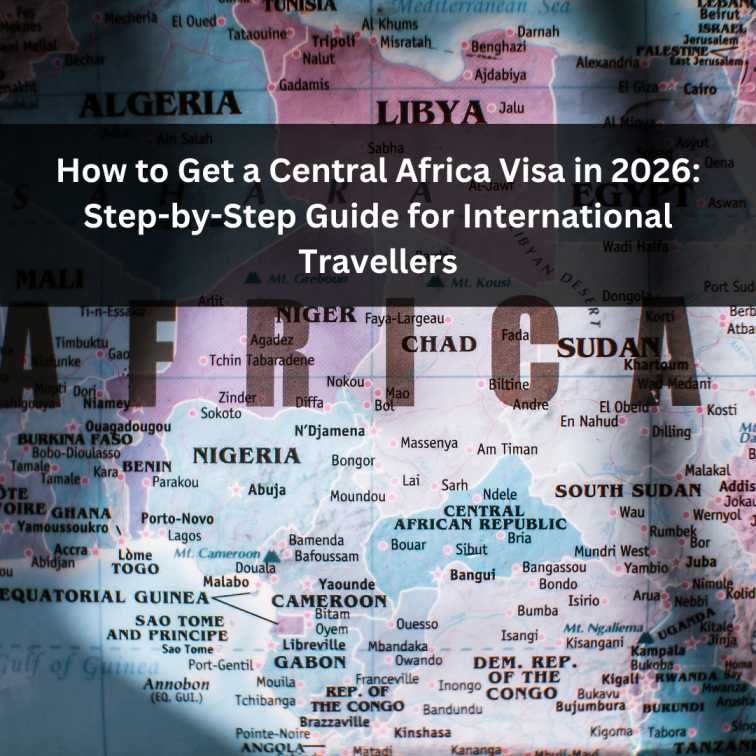
Planning to travel to Central Africa?
The region offers some of Africa’s most fascinating travel experiences, from the rainforests of Gabon and Cameroon to the wildlife of the Central African Republic, the Congo Basin, the Atlantic coastline and the cultural attractions of countries such as Equatorial Guinea and São Tomé and Príncipe.
But before booking your trip, there is one important thing to understand:
There is no single tourist visa that allows most international travellers to visit every country in Central Africa.
In most cases, you must check the visa requirements for each country you plan to visit.
Depending on your nationality and destination, you may be able to apply for an eVisa, visa on arrival, embassy visa or another form of electronic travel authorisation.
This guide explains how to determine whether you need a visa, how to apply and where to find official visa information for some of the region’s most popular destinations.
Which Countries Are Considered Central Africa?
Central Africa can refer to different groups of countries depending on the organisation or geographic definition being used.
The Economic Community of Central African States (ECCAS) includes:
- 🇦🇴 Angola
- 🇧🇮 Burundi
- 🇨🇲 Cameroon
- 🇨🇫 Central African Republic
- 🇹🇩 Chad
- 🇨🇬 Republic of the Congo
- 🇨🇩 Democratic Republic of the Congo
- 🇬🇶 Equatorial Guinea
- 🇬🇦 Gabon
- 🇸🇹 São Tomé and Príncipe
Some broader geographic definitions may also include countries such as Rwanda.
Because visa rules are established by individual governments, the most important thing for a traveller is not simply identifying the region but determining the specific country or countries on your itinerary.
Is There a Central African Tourist Visa?
Generally, no single tourist visa covers all Central African countries.
This is different from the East Africa Tourist Visa, which specifically covers Kenya, Rwanda and Uganda.
If you are travelling around Central Africa, you should therefore check each country’s immigration requirements separately.
For example, someone travelling:
Cameroon → Gabon → Republic of the Congo
should check the visa requirements for all three countries.
Do not assume that obtaining a visa for Cameroon automatically allows you to enter Gabon or the Republic of the Congo.
Step 1: Determine Your Nationality
Your passport is one of the most important factors determining whether you need a visa.
The same destination can have completely different requirements for different nationalities.
For example, an African citizen may qualify for a visa exemption or visa-on-arrival arrangement while a traveller from another country may need to apply for a visa before travelling.
Start by identifying:
What passport will I use to travel?
Then check the official immigration requirements of your destination.
Step 2: Identify Every Country You Will Visit
Create a list of every country on your itinerary.
For example:
Cameroon → Gabon → São Tomé and Príncipe
You should then check:
- Cameroon visa requirements
- Gabon visa requirements
- São Tomé and Príncipe visa requirements
If you are crossing borders by land, this is especially important because you may encounter several immigration checkpoints during your trip.
Step 3: Check Whether You Need a Visa
Once you know your nationality and destination, determine whether you need:
- No visa
- eVisa
- Visa on arrival
- Embassy/consular visa
- Electronic travel authorisation
- Other entry permit
Use the official government or immigration website wherever possible.
Visa policies can change, so do not rely solely on old travel blogs or information posted on social media.
Step 4: Choose the Correct Visa Category
If you need a visa, make sure you select the correct category.
Common categories include:
Tourist Visa
For holidays and sightseeing.
Business Visa
For meetings, conferences and business activities.
Transit Visa
For travellers passing through the country.
Visit Visa
For visiting friends or relatives.
Student Visa
For educational purposes.
Work Visa
For people who have been authorised to work in the country.
If you intend to work, study or live in Central Africa, do not apply for a tourist visa simply because it is easier to obtain.
Step 5: Check Your Passport
Before beginning the application, check your passport.
Many countries require passports to have a minimum period of validity, often six months beyond the intended date of entry.
Also check that:
- Your passport is undamaged.
- Your name is correctly displayed.
- You have sufficient blank pages where required.
- Your passport information matches your application.
If you are travelling with children, check whether additional documentation is required.
Step 6: Prepare Your Documents
The exact requirements vary by country.
However, you may be asked to provide:
- Valid passport
- Passport photograph
- Completed visa application
- Return or onward ticket
- Hotel reservation
- Proof of accommodation
- Proof of sufficient funds
- Travel itinerary
- Travel insurance
- Invitation letter
- Yellow fever vaccination certificate
- Proof of employment or business activities
- Other supporting documents
Do not submit fake reservations or altered documents.
Step 7: Find the Official Visa Portal
Once you know that you need a visa, locate the official application website.
Look for:
- Government websites
- Immigration department websites
- Foreign affairs ministry websites
- Official embassy websites
Be careful with websites that appear to be government websites but are actually private visa agencies.
Third-party agencies may legitimately assist with applications, but they can charge additional service fees.
Step 8: Create an Account if Required
Some Central African countries use online visa systems.
If an account is required, you may need to provide:
- Full name
- Email address
- Telephone number
- Nationality
- Password
Keep your login information and application reference number.
Step 9: Complete the Application Form
Enter your information exactly as it appears on your passport.
Typical information includes:
- Full name
- Date of birth
- Nationality
- Passport number
- Passport issue date
- Passport expiry date
- Occupation
- Residential address
- Purpose of travel
- Intended arrival date
- Intended departure date
- Accommodation details
Before submitting, carefully check every field.
Step 10: Upload Your Supporting Documents
Upload the required documents according to the instructions.
Your passport scan should be clear and readable.
If a photograph is required, make sure it meets the specified size and format.
Some countries may also request:
- Flight itinerary
- Hotel booking
- Invitation letter
- Proof of funds
- Vaccination certificate
Only upload documents that are genuine and belong to you.
Step 11: Pay the Visa Fee
If a visa is required, you will normally need to pay a fee.
The amount varies according to:
- Country
- Nationality
- Visa category
- Length of stay
- Number of entries
- Processing method
Some countries offer different prices for single-entry and multiple-entry visas.
Always check the official fee before making payment.
Step 12: Submit Your Application
After completing the application and uploading the required documents, submit it.
Save your:
- Application number
- Payment receipt
- Confirmation email
- Login details
- Appointment details, if applicable
You may need these details to track your application.
Step 13: Attend an Embassy Appointment if Required
Not every country uses a completely online process.
Depending on your nationality and visa type, you may need to visit:
- Embassy
- Consulate
- Visa application centre
- Immigration office
You may be required to submit your passport, supporting documents, biometrics or additional information.
Follow the instructions provided by the relevant authority.
Step 14: Track Your Application
If the country provides online tracking, use your application reference number.
Your application may show statuses such as:
- Received
- Processing
- Additional information required
- Approved
- Refused
- Ready for collection
Processing times can vary, so apply well before your planned travel date.
Step 15: Receive Your Visa
If approved, you may receive:
- eVisa
- Visa approval letter
- Visa sticker
- Visa stamp
- Other electronic travel authorisation
Check the document carefully.
Confirm:
Name → Passport number → Visa type → Validity → Number of entries → Permitted stay
If you find an error, contact the issuing authority before travelling.
Step 16: Prepare for Your Journey
Before travelling, keep your important documents accessible.
Carry:
- Passport
- Visa/eVisa
- Flight ticket
- Hotel reservation
- Travel insurance
- Yellow fever vaccination certificate where required
- Invitation letter if applicable
- Return/onward ticket where required
It is also a good idea to keep electronic copies of your documents.
Popular Central African Countries and Official Visa Links
🇨🇲 Cameroon
Cameroon is one of Central Africa’s most important destinations, with attractions ranging from cities such as Yaoundé and Douala to wildlife and natural landscapes.
Cameroon has an electronic visa system for eligible travellers.
The official Cameroon eVisa platform provides information about visa applications and requirements.
Official resource:
Cameroon eVisa – Official Portal
Applicants should check the current requirements based on their nationality before submitting an application.
🇬🇦 Gabon
Gabon is known for its rainforests, wildlife and national parks, including areas where travellers can experience the country’s rich biodiversity.
Gabon provides an electronic visa system for eligible travellers.
Official resource:
Before applying, check the latest eligibility requirements and required documents.
🇨🇬 Republic of the Congo
The Republic of the Congo, sometimes called Congo-Brazzaville, is home to rainforest ecosystems, wildlife and the city of Brazzaville.
Travellers should check the latest visa requirements with the country’s diplomatic or immigration authorities.
Official resource:
Republic of the Congo – Ministry of Foreign Affairs
Because the Republic of the Congo and the Democratic Republic of the Congo are different countries, make sure you select the correct visa information.
🇨🇩 Democratic Republic of the Congo
The Democratic Republic of the Congo (DRC), sometimes called Congo-Kinshasa, is one of Africa’s largest countries.
Popular attractions include Kinshasa, Virunga National Park and the Congo Basin.
Visa requirements depend on nationality and purpose of travel.
Official resource:
Democratic Republic of the Congo – Ministry of Foreign Affairs
Travellers should confirm the current visa procedure before booking their trip.
🇸🇹 São Tomé and Príncipe
São Tomé and Príncipe is an island nation in the Gulf of Guinea and is particularly attractive to travellers looking for beaches, nature and a quieter tropical destination.
The country has visa exemptions for certain nationalities and an online visa system for others.
Official resource:
São Tomé and Príncipe Immigration and Migration Service
Check your nationality’s requirements before travelling.
🇬🇶 Equatorial Guinea
Equatorial Guinea consists of a mainland region and several islands, including Bioko, where the capital Malabo is located.
Visa requirements can be more restrictive than in some other African destinations.
Travellers should therefore check the latest requirements directly with the country’s diplomatic or immigration authorities.
Official resource:
Equatorial Guinea – Ministry of Foreign Affairs
If an embassy appointment is required, contact the relevant diplomatic mission before making travel arrangements.
🇨🇫 Central African Republic
The Central African Republic is located in the heart of the African continent.
International travellers should check visa requirements with the nearest Central African Republic embassy or consulate before travelling.
Official resource:
Central African Republic – Ministry of Foreign Affairs
Because online visa services and entry requirements can change, confirm the current application procedure before travelling.
🇹🇩 Chad
Chad is another Central African destination with its own immigration and visa requirements.
Travellers should contact the relevant Chadian embassy or consulate for the latest requirements.
Official resource:
Chad – Ministry of Foreign Affairs
🇦🇴 Angola
Angola is located on the western coast of Southern/Central Africa and is an important destination for business and tourism.
Angola has an electronic visa system for eligible travellers.
Official resource:
Angola eVisa – Official Portal
Check the official immigration information to determine whether your nationality qualifies for an eVisa or visa exemption.
🇧🇮 Burundi
Burundi is part of the broader Central/East African region and is also a member of the East African Community.
However, the East Africa Tourist Visa does not automatically cover Burundi.
Travellers should therefore check Burundi’s own visa requirements.
Official resource:
Burundi Ministry of Foreign Affairs
Travelling to Multiple Central African Countries
If you are planning a multi-country trip, create a separate visa checklist for each destination.
For example:
Cameroon → Gabon → Congo
Check:
Cameroon visa requirements
Gabon visa requirements
Republic of the Congo visa requirements
Do not assume that one visa covers the entire journey.
What About African Citizens?
African citizens should not automatically assume that they can enter every Central African country without a visa.
Visa exemptions and regional arrangements differ.
Some countries have bilateral or regional agreements that allow certain African nationals to enter without a visa or obtain one more easily.
Therefore, check the rules based on your specific passport.
For example, a Nigerian traveller, Kenyan traveller and Ghanaian traveller may not necessarily have identical visa requirements for the same Central African destination.
What If I Am Travelling by Land?
Land travel requires additional planning.
If your itinerary involves crossing borders such as:
Cameroon → Gabon
or
Rwanda → Burundi → DRC
you should check the immigration requirements at every border.
You may also need to consider:
- Border opening hours
- Visa validity
- Multiple-entry requirements
- Yellow fever certificates
- Vehicle documentation
- Proof of onward travel
- Local transportation requirements
A visa that permits one entry may not be sufficient if you leave the country and later attempt to return.
Central Africa Visa Checklist
Before your trip, make sure you have checked:
☐ Passport validity
☐ Visa requirement
☐ Correct visa category
☐ Number of entries permitted
☐ Visa validity period
☐ Maximum permitted stay
☐ Application fee
☐ Passport photograph
☐ Flight itinerary
☐ Accommodation
☐ Travel insurance where required
☐ Yellow fever certificate where required
☐ Invitation letter where applicable
☐ Return/onward ticket
☐ Visa approval
☐ Copies of all important documents
Common Mistakes to Avoid
1. Looking for a single “Central Africa Visa”
There is generally no single tourist visa covering all Central African countries.
Check each destination separately.
2. Confusing the two Congos
The Republic of the Congo and the Democratic Republic of the Congo are separate countries.
Make sure you apply for the correct destination.
3. Assuming African citizens are automatically visa-free
Visa exemptions vary according to nationality and bilateral agreements.
4. Using an unofficial visa website
Always start with an official government, immigration or embassy website.
5. Ignoring yellow fever requirements
Some African countries require travellers arriving from certain countries to provide a yellow fever vaccination certificate.
Check the health requirements before departure.
6. Applying too late
Visa processing times vary.
Apply well before your intended travel date.
7. Booking expensive non-refundable travel before checking visa rules
Confirm the visa requirements before committing to non-refundable flights and accommodation.
Frequently Asked Questions
Is there a Central Africa Tourist Visa?
No single tourist visa currently covers all Central African countries for international travellers.
Visa requirements are generally determined by individual countries.
Which Central African countries offer eVisas?
Several countries have introduced online visa systems or electronic visa services, but eligibility varies by nationality.
Always use the official government portal and verify the current requirements.
Can I travel around Central Africa with one visa?
Generally, no.
If you visit multiple countries, you should check each country’s immigration requirements separately.
Do I need a visa if I am an African citizen?
It depends on your nationality and destination.
Some countries provide visa exemptions or simplified entry arrangements for citizens of certain African countries.
How early should I apply?
There is no universal timeframe because processing times differ.
A good approach is to check the official processing time and apply well before your intended departure.
Can I work in Central Africa on a tourist visa?
Generally, no.
Tourist visas are intended for tourism and short visits. If you plan to work, you should obtain the appropriate work authorisation.
Final Advice
Central Africa can be an exciting destination for travellers, but visa planning is particularly important when visiting several countries.
Start with your passport nationality, identify every country on your itinerary and then check the official immigration requirements for each destination.
If you are travelling to:
Cameroon → Gabon → Republic of the Congo
for example, don’t search for one “Central Africa visa.”
Instead, check the requirements for Cameroon, Gabon and the Republic of the Congo individually.
Whenever possible, apply through the official government or immigration portal and avoid relying on outdated information from third-party websites.
Most importantly, check visa rules before booking your trip, as requirements, fees, processing times and entry conditions can change.
Disclaimer: OpportunityShape is an independent information platform and is not affiliated with the Economic Community of Central African States (ECCAS), the governments of Cameroon, Gabon, the Republic of the Congo, the Democratic Republic of the Congo, Angola, Equatorial Guinea, São Tomé and Príncipe, Chad, the Central African Republic, Burundi or any other immigration authority, embassy or visa-issuing agency mentioned in this article.
This article is provided for general informational and educational purposes only. Visa requirements, fees, processing times, entry conditions and immigration policies can change without notice.
While OpportunityShape makes reasonable efforts to provide accurate and up-to-date information, we do not guarantee that the information contained in this article will remain current.
Always verify the latest visa and entry requirements directly with the official immigration authority, government website, embassy or consulate of the country you intend to visit before applying or making travel arrangements.
OpportunityShape does not issue visas, guarantee visa approval or provide immigration or legal advice. We are not responsible for visa refusals, delays, additional charges, changes in immigration requirements or decisions made by immigration authorities.